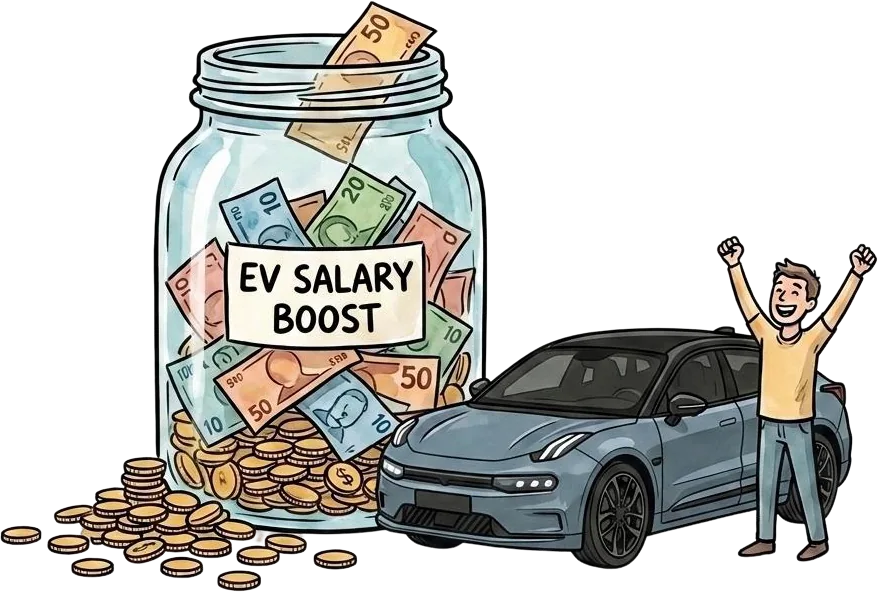
EV Salary Boost
A pay rise you can drive.
Lease a new or near-new electric vehicle using your pre-tax salary. One weekly payment covers the car, charging, insurance and maintenance, and most workers come out ahead from week one compared with an older petrol car on a loan.
Draft · numbers under review · September 2026

We're strapped to the
imported-fuel rollercoaster
Over half of New Zealand's energy comes from offshore. Every time there's a war, a pandemic or a shipping shock, the bill lands on households, and lower-income homes are hit hardest because they spend more of their income on fuel. So far the response has been short-term salves that keep us strapped in.

spent on fuel imports every year, in a normal year
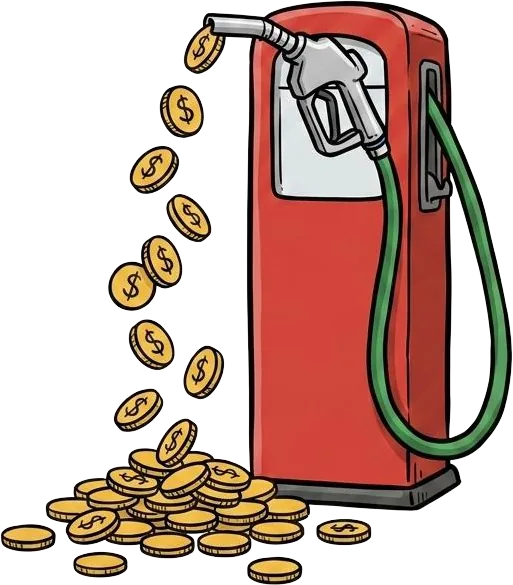
at the petrol pump, rising to $60 million a day during the war in the Middle East

inflation, with imported petrol driving about a quarter of the annual increase

paid to 100,000+ homes to cope with fuel costs. The relief lasts only as long as the payments do.
EVs are far cheaper to run.
Most people can't get into one.
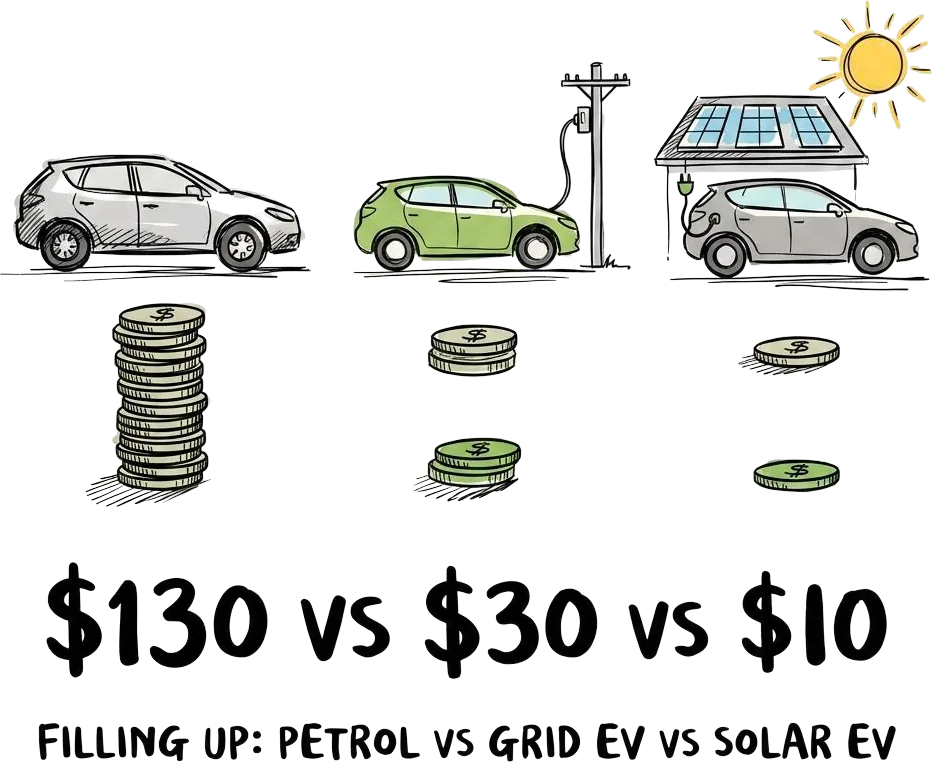
Filling a 50-litre petrol tank costs about $130. The equivalent EV "tank" costs about $30 from the grid, or $10 from home solar. Everyone can technically afford an EV because it costs less than what they pay now. Access is the problem: most households have less than $500 in savings, and the finance on offer is expensive.
- Fewer than 20% of households qualify for a bank green loan
- Other car finance runs at 14–22% interest over short terms
- 44% say upfront cost is the biggest barrier (Consumer NZ)
- 27% want an EV within three years, but fewer than 4% of New Zealanders buy a new car each year

qualify for a green loan

say upfront cost is the biggest barrier

want an EV within three years, versus those who buy a new car each year
One weekly payment,
taken out before tax
EV Salary Boost is a lease on an electric vehicle paid for from your pre-tax salary. In Australia it's called a novated lease, and it's proven and hugely popular. It swaps one of the most uncertain bills, fuel, for one predictable weekly payment, and the income-tax saving is what tips the balance in your favour.
- Your pay. Same job, same salary. Your employer runs it through payroll as usual, but before tax is worked out it is split in two: part to the lease, the rest to you. No cost to the employer.
- Leasing company. Gets the lease payment, taken out before tax. They buy and own the EV, with insurance and servicing bundled into the lease.
- Income tax. Slightly less than before, because the lease came out first and a smaller amount is left to be taxed. That is the boost.
- You. Two things arrive: a new EV to drive, and your take-home pay. Most people end up ahead compared with an older petrol car.

You pick the EV
New or near-new. A specialist leasing company buys it and owns it for the lease term (typically five years, no deposit).
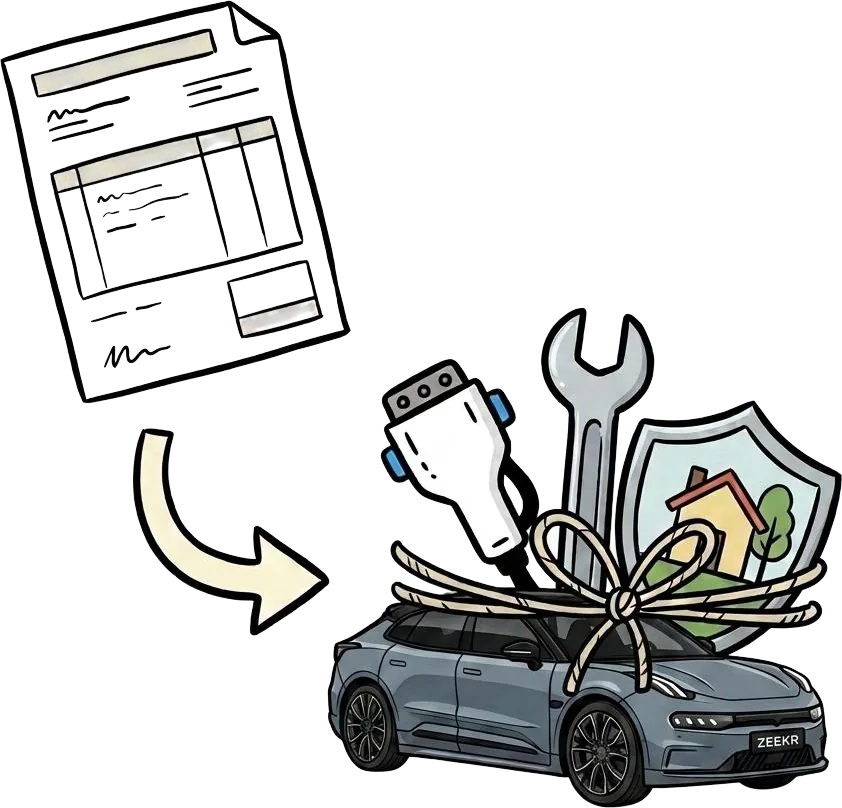
Everything is bundled
Car, charging, insurance, servicing, maintenance and tyres roll into one weekly lease payment. No surprise bills.

Your employer deducts it from pre-tax pay
Payroll pays the leasing company before income tax is applied. That's the boost: you get more from the salary you already earn.

What that means for you
- No deposit, no bank loan. You need a job and an employer who's signed up, not a mortgage.
- The lease (and the car) goes with you if you change jobs, and stays pre-tax if your new employer is in the scheme too.
- Keep it or hand it back at the end. Make a final "balloon" payment to own it outright, extend the lease, or start a new one.
- Your employer never owns the car or carries it on their books. Their only job is the payroll deduction.
Australia already did this.
It works.
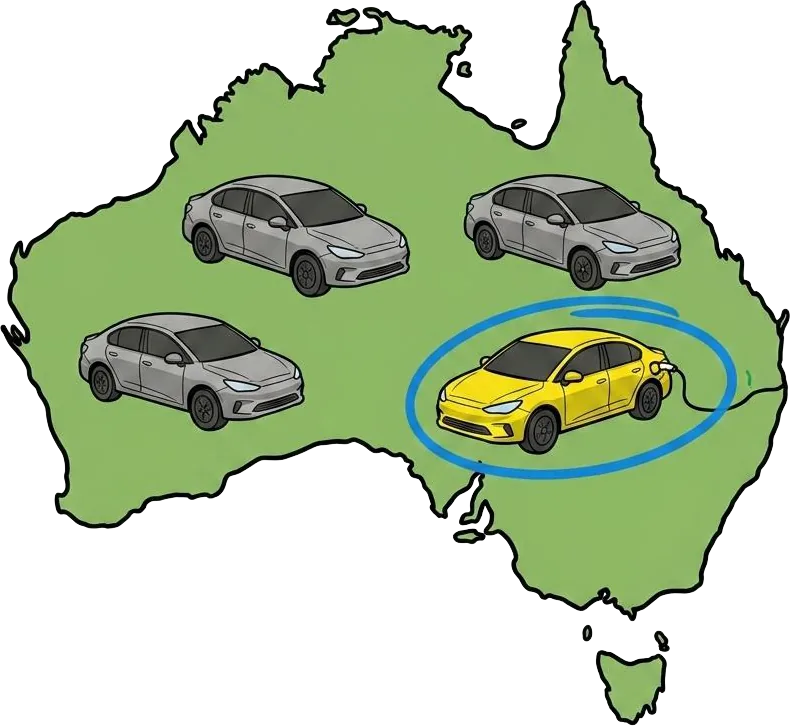
One in four new cars sold in Australia in June was fully electric, up from around 7% a year earlier. Over half of those EVs were bought through the novated lease scheme.
The biggest impact has been on workers earning A$40,000 to A$79,000: nurses, teachers, tradies, hospo and factory workers, public servants, and staff at small businesses. Not the "millionaires in Remuera buying Teslas" that sank the old Clean Car Discount.

A$40k–$79k is where the scheme has landed hardest: nurses, teachers, tradies, hospo and factory workers, public servants and SME staff.
Six workers. Six cars.
What the weekly bill looks like.
Real-world comparisons for the kind of people this scheme is built for. Every figure is the all-in weekly cost: finance or lease, fuel or charging, insurance, maintenance, licensing and road user charges. Pick a person that looks like you.

Meet Priya: $70k, and shopping for a reliable mid-range car
Office job in town, drives around 11,000km a year. Shopping for a reliable car and choosing between a used Corolla on a standard car loan, or a brand-new EV through EV Salary Boost.

2020 Toyota Corolla


New MG EV4 Urban
A brand-new car for $31 a week less, about $1,500 a year. Drive 20,000km a year and the saving rises to around $55 a week.
Where do the savings come from?
| Corolla on a loan | MG EV4 on EV Salary Boost | |
|---|---|---|
| Car price | $19,000 | $39,990 MSRP |
| Weekly energypetrol at $2.90/L vs charging | $45 | $10 |
| Other weekly costsinsurance, maintenance, licensing, EV road user charges, lease balloon payment | $173 | $177 |
| Weekly cost | $218 | $187 |
Assumes $70,000 gross income and 11,000km a year. Finance rate for the Corolla is 17%; second-hand car finance typically ranges 14–22%. Running costs from the AA's 2026 Car Running Costs Report.

Meet Sean: $120k, a boat to tow and a lot of kilometres
Drives 40 minutes to a rural factory job, around 25,000km a year, and takes the boat out at weekends. Earns good money but the green loan is maxed out from double-glazing the house. He needs a ute that can do it all.

2024 Toyota Hilux
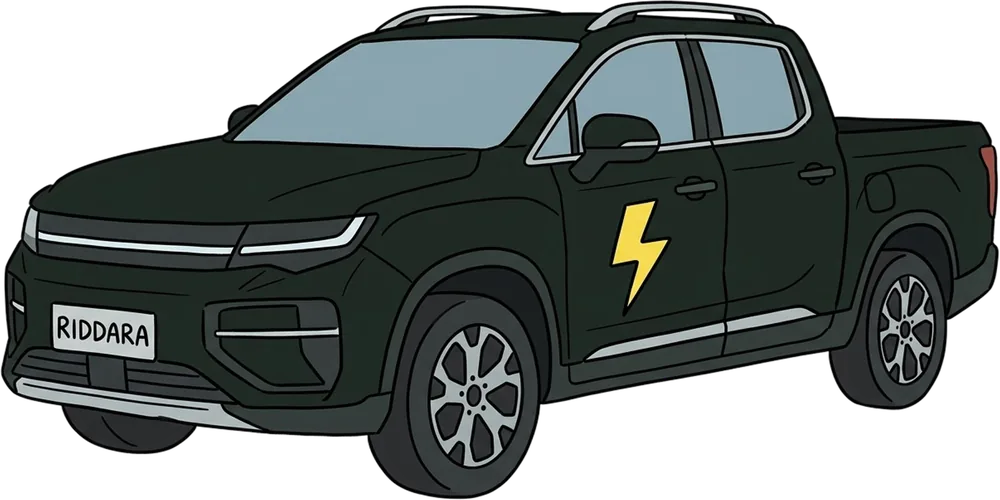
New Geely Riddara R6
Sean saves around $8,700 a year and still tows the boat. The more kilometres you do, the bigger the gap gets.
Where do the savings come from?
| Hilux on a loan | Riddara on EV Salary Boost | |
|---|---|---|
| Car price | $42,000 | $70,000 MSRP |
| Weekly energydiesel at $2.61/L vs charging | $108 | $28 |
| Other weekly costsinsurance, maintenance, licensing, road user charges, lease balloon payment | $372 | $285 |
| Weekly cost | $480 | $313 |
Assumes $120,000 gross income and 25,000km a year. Finance rate for the Hilux is 16%. Running costs from the AA's 2026 Car Running Costs Report for new vehicles; maintenance on used vehicles may be higher.

Meet Raniera: $78k, a teacher who only buys second-hand
Short commute to the secondary school, family four to five hours away, around 14,000km a year. Brought up believing new cars don't make sense. Wants low kilometres and no repair bills for years.
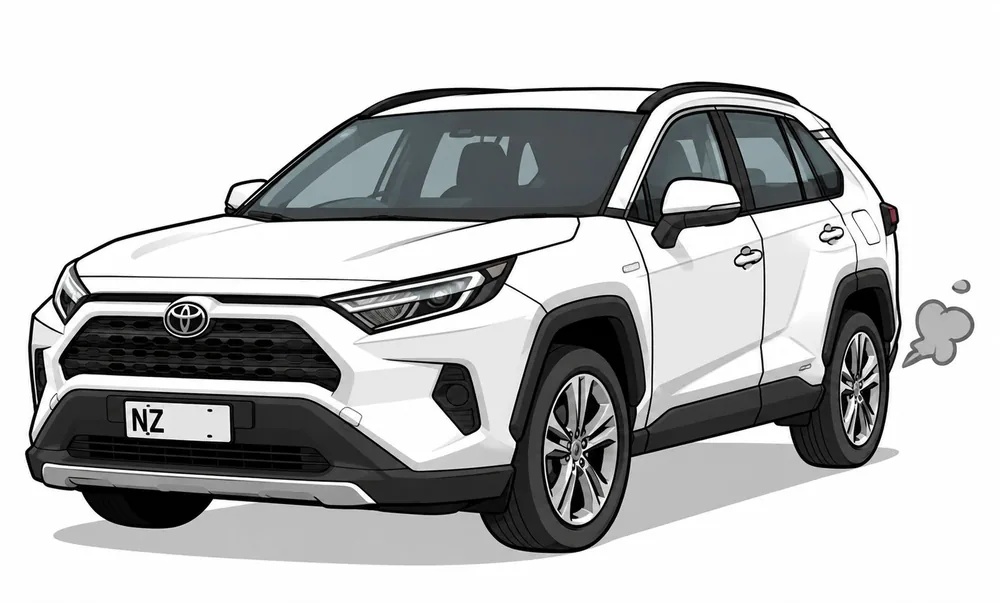
2024 Toyota RAV4

2024 BYD Atto 3 (ER)
Second-hand versus second-hand, Raniera is $5,200 a year better off. The scheme works for used EVs too.
Where do the savings come from?
| RAV4 on a loan | Atto 3 on EV Salary Boost | |
|---|---|---|
| Car price | $34,000 | $40,990 |
| Weekly energypetrol at $2.90/L vs charging | $41 | $14 |
| Other weekly costsinsurance, maintenance, licensing, road user charges | $264 | $191 |
| Weekly cost | $305 | $205 |
Assumes $78,000 gross income and 14,000km a year. Finance rate for the RAV4 is 17%. Running costs from the AA's 2026 Car Running Costs Report.

Meet Suzie: $60k, a care worker whose car is already paid off
Drives between clients' homes, 80 to 130km every working day, around 27,000km a year. Her older car is paid off but petrol keeps rising and the maintenance bills are creeping up. Is it worth switching?
2021 Toyota Corolla
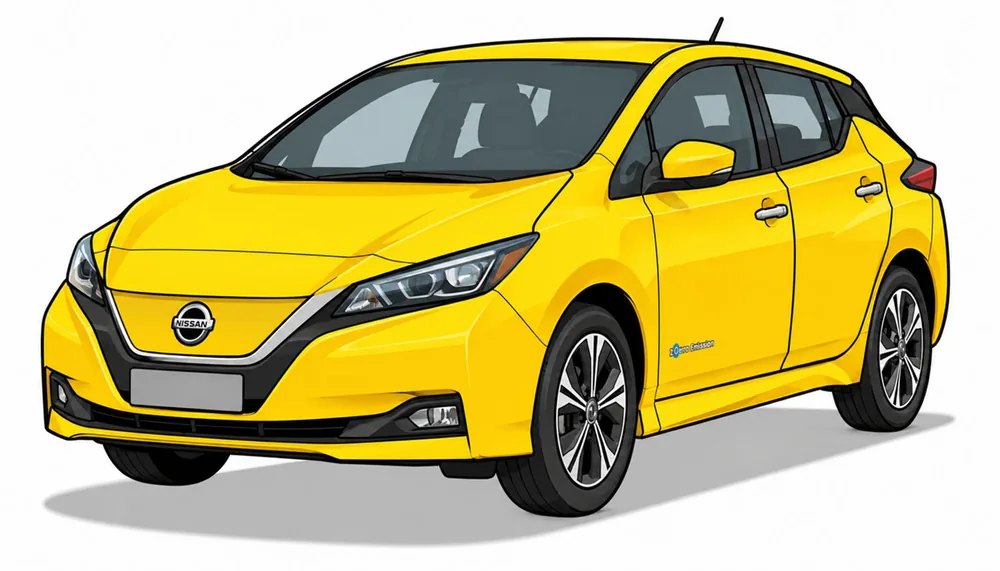
2021 Nissan Leaf
Even against a car that's already paid off, a used Leaf on the scheme comes out ahead because of Suzie's mileage. Sell the Corolla and buy the Leaf outright, and she'd be about $57 a week better off.
Where do the savings come from?
| Corolla, paid off | Leaf on EV Salary Boost | |
|---|---|---|
| Car price | $0 (paid off) | $13,930 |
| Weekly energypetrol at $2.90/L vs charging | $110 | $25 |
| Other weekly costsinsurance, maintenance, licensing, road user charges | $93 | $161 |
| Weekly cost | $203 | $186 |
Assumes $60,000 gross income and 27,000km a year. Upkeep costs from the AA's 2026 Car Running Costs Report, based on new-vehicle costs; maintenance on an older car is likely higher, which would widen the gap.

Meet Mele: $150k, two kids and a brand-new car in mind
City family, lots of highway driving, around 20,000km a year. Wants something safer and is weighing up a new hybrid against a new EV.
2026 Toyota Corolla Hybrid

2026 Zeekr 7X RWD
Even against a brand-new hybrid, Mele saves $3,800+ a year and gets a bigger, safer car.
Where do the savings come from?
| Corolla Hybrid on a loan | Zeekr 7X on EV Salary Boost | |
|---|---|---|
| Car price | $40,000 | $59,990 |
| Weekly energypetrol at $2.90/L vs charging | $59 | $19 |
| Other weekly costsinsurance, maintenance, licensing, road user charges, lease balloon payment | $285 | $247 |
| Weekly cost | $344 | $266 |
Assumes $150,000 gross income and 20,000km a year. Finance rate for the Corolla is 12% given Mele's income. Running costs from the AA's 2026 Car Running Costs Report.

Meet Charlie: $62k, recent graduate, first EV
Two years into a job at a small accounting firm, just had a pay rise. Lives semi-rurally, wants to visit friends without worrying about range, and drives around 11,000km a year.
2021 Nissan Leaf

New Dongfeng Box
Used EV versus new EV, so no petrol saving to lean on. But $14 a week more gets Charlie a brand-new car with over 100km more range and a full warranty.
Where does the difference come from?
| Used Leaf on a loan | Dongfeng Box on EV Salary Boost | |
|---|---|---|
| Car price | $11,000 | $39,990 MSRP |
| Weekly energycharging | $9 | $9 |
| Other weekly costsinsurance, maintenance, licensing, road user charges, lease balloon payment | $143 | $158 |
| Weekly cost | $152 | $166 |
Assumes $62,000 gross income and 11,000km a year. Finance rate for the Leaf is 17%. Running costs from the AA's 2026 Car Running Costs Report, based on new-vehicle costs; second-hand costs may be higher.
All comparisons assume a five-year lease and include vehicle financing, fuel or electricity, maintenance, insurance and road user charges, based on the AA's 2026 Car Running Costs Report. Petrol at $2.90 a litre. Savings will be larger the more kilometres you drive and the higher fuel prices go. Draft figures, under review.
How does it stack up
for how you drive?
Start from the comparison closest to you, then drag the sliders. The more you drive, and the more fuel costs, the further ahead the EV pulls.
Toyota Corolla
MG EV4 Urban
Indicative only. This scales Rewiring's persona comparisons: fuel cost moves with distance and pump price, charging moves with distance, and EV road user charges move with distance ($76 per 1,000km). Insurance, finance and servicing are held constant. Not financial advice, and draft numbers pending the final model.
Happy with the old dunger?
She's got 150,000km on the clock and you've had some good times. But the mechanic says it needs $2,000 of work to get back on the road, and you're crossing your fingers there isn't a similar bill next year. Let's be honest, that's what most of us do.

to keep running the old car: about $28,000 over the next five years, plus the $2,000 repair, plus whatever comes next.

only≈$80more a week
gets you a brand-new EV through EV Salary Boost, with no $2,000 repair bill and maybe some cash for selling the old one.
Every household that switches
makes the whole country stronger
Vehicle purchases are private decisions, but the benefits are public. Going electric saves homes thousands, communities millions and the country billions every year, and the biggest saving is avoided imported fuel.

of imported fuel displaced every year by EV Salary Boost, in the central scenario
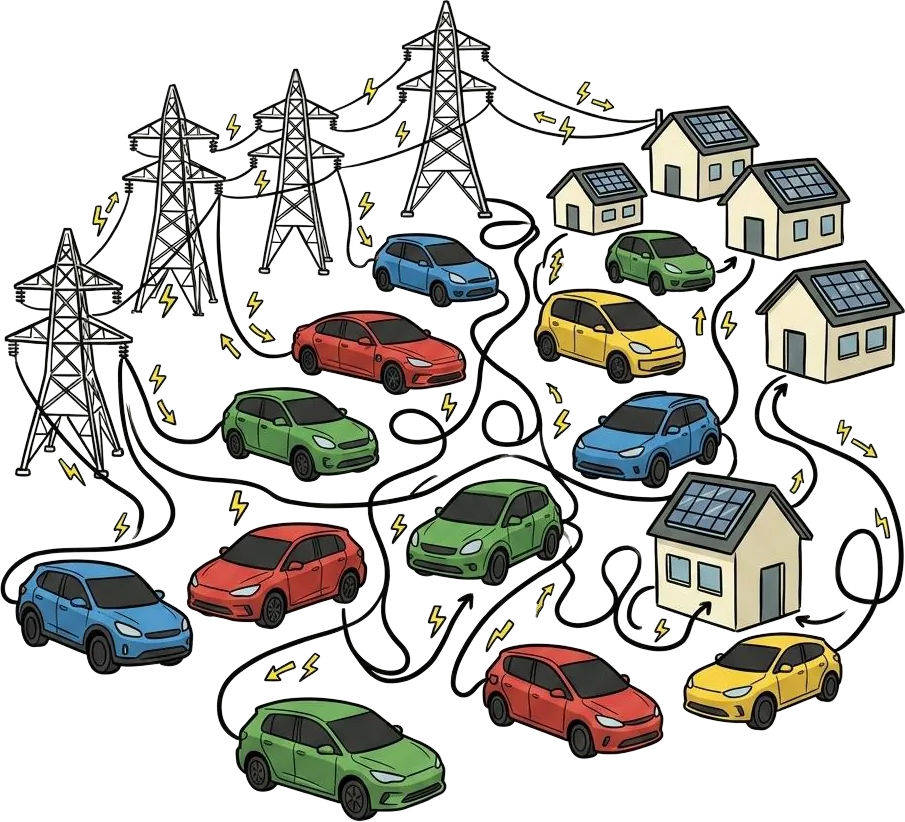
of extra fuel storage if all 4.3 million light vehicles were electric, and the country's biggest power station with two-way charging

average age of a car in NZ, one of the oldest fleets in the OECD. Australia's is 11, the UK's is 9.

New Zealanders rely on a car as their main way of getting to work

of NZ emissions come from transport, and 70% of that from cars, utes, vans and light trucks

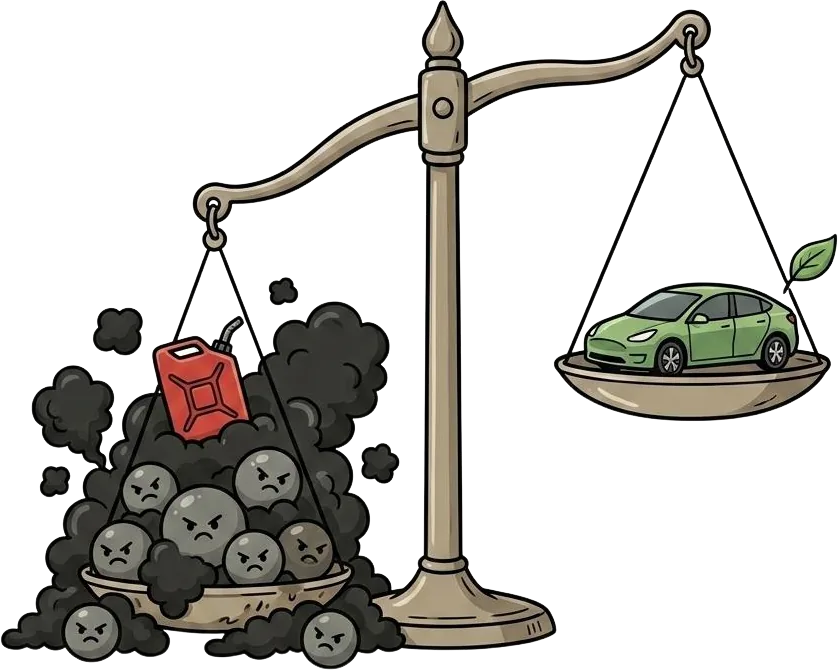
of CO₂-e avoided every year when a household swaps a petrol car for an electric one
premature deaths a year linked to vehicle pollution that more EVs would help reduce

found accelerating EV adoption improves fuel security and is "the only measure that permanently cuts fuel demand"
Cheaper than what we're
already doing
The Government is paying over 100,000 households $50 a week to cope with fuel prices. Those payments buy less fuel every time the price goes up, and the relief stops the moment they do.
EV Salary Boost costs the Government much less than $50 a week per household in foregone income tax, while households benefit to the tune of $30 to $50 a week for the whole lease, and the country benefits for the life of the vehicle.
- Almost no administration. Delivered by employers, payroll systems and leasing providers that already exist.
- Two-thirds pays for itself. Around two-thirds of the foregone tax comes back as GST on new car sales, collected up front while the tax cost accrues over five years. The scheme could be revenue-positive in its early years.
- Easy to contain. Cap the vehicle value or limit the number of tax-free years. Even a two-year cap still leaves most workers well ahead.
- Could be live by Christmas if enacted this term: around 30,000 new leases a year, reaching 150,000 within five years.

"We cannot control international events, but we can control our response to them." So far that response has been short-term salves. New Zealand-made energy is an escape hatch. EV Salary Boost helps open it.Quoting Finance Minister Nicola Willis · Rewiring Aotearoa
Three moves to open the escape hatch
Rewiring Aotearoa is pushing for the Government to pass both the Ratepayer Assistance Scheme and EV Salary Boost this term. Together they would deliver the biggest cost-of-living relief of any intervention we've seen, at a low cost to the Crown. If not now, parties should commit to it in their first 100 days.
Pass EV Salary Boost
Let salaried workers lease a new or used EV from pre-tax income, with the lease exempt from income tax so the employee gets the full benefit. Five-year leases to start, ideally extended to match seven-year EV warranties. Delivered through existing payroll and leasing providers.
Fringe Benefit Tax relief for company EVs
Around 60% of new cars are bought by businesses. Changes to FBT for company EVs have been announced, but more is needed to shift fleets, and every fleet EV becomes a second-hand EV for a household a few years later.
Accelerated depreciation for business EVs
Like Investment Boost for the rest of the economy: let businesses write down electric vehicles faster so the fleet turns over sooner and the used market fills up with affordable EVs.
Employers hold the key.
It costs you nothing to turn it.
Employers are essential because you provide access to pre-tax income. That's the whole job. The leasing company owns the car and carries the risk; payroll makes the deduction. Unlike bike-to-work schemes, there is no float, no capital outlay and nothing on your balance sheet.
Nothing to fund
The leasing company buys and owns the vehicle. You never pay the invoice, hold the asset or chase the debt.
Just a payroll line
Sign up with a leasing provider and deduct the lease from participating employees' pre-tax salary. The same mechanism payroll already uses for other salary-sacrifice benefits.
A benefit staff actually want
Effectively a pay rise for your team without touching your wage bill. Leases transfer if someone moves on, so there's no lock-in on either side.
Would your organisation offer this?
To give political parties the confidence to legislate, they need to know businesses would put EV Salary Boost in front of their staff. Half of Australia's EV sales came through employers like you. Tell us you're in, or ask us anything.
Questions people ask
What is a novated lease, in plain English?
A lease is a contract where the owner of an asset lets you use it for an agreed time in exchange for regular payments. A novated lease adds your employer to the agreement: the leasing company owns the car, you drive it as if it's yours, and your employer pays the lease straight from your salary before income tax is calculated. That pre-tax treatment is the boost.
What's a balloon payment?
A final lump sum at the end of the lease, set at the car's expected market value when you sign up. Pay it and the car is yours for good. Or you can hand the car back, extend the lease, or start a new one on a newer car. In Australia most people buy the car at the end. The persona comparisons above include the balloon payment in the weekly cost.
What happens if I change jobs?
The lease, and the car, go with you. If your new employer is also in the scheme the payments simply move to their payroll and stay pre-tax. If they aren't, you keep paying the lease from after-tax income until they sign up. Either way the leasing company, not your old employer, is the other party to your lease.
Does my employer own the car or carry any risk?
No. This is the crucial difference from some bike-to-work schemes, where the employer buys the bike and claws back the cost. Under EV Salary Boost the leasing company buys and owns the vehicle. There is no float, no capital outlay, no asset on the employer's balance sheet and no liability if the car is damaged or stolen (comprehensive insurance is bundled into the lease).
Can I lease a second-hand EV?
That's how we've modelled it. Raniera's and Suzie's comparisons above are used EVs (a 2024 BYD Atto 3 and a 2021 Nissan Leaf). Very old EVs are unlikely to be offered by leasing companies, but vehicles under about five years old should be. Widening access to used EVs is a key design goal because it reaches lower-income workers.
Are road user charges included?
Yes. Every weekly figure on this page includes EV road user charges, currently $76 per 1,000km for light EVs, alongside insurance, maintenance and licensing. RUCs are also why the calculator's EV cost creeps up as you add kilometres.
Who can use it? What about hourly or part-time workers?
Anyone paid through PAYE by a participating employer. In Australia the scheme is mostly used by salaried staff, but it also works for part-time and hourly workers with regular enough hours to cover the weekly lease, because the deduction is a fixed dollar amount rather than a percentage of pay. Casual and irregular work is a harder fit, which is one reason we're also pushing for other routes into EVs.
Isn't this just a subsidy for people who could already afford an EV?
The Australian evidence says the opposite: the biggest uptake is among workers earning A$40,000 to A$79,000. The scheme works precisely because it doesn't need savings, a deposit or a mortgage. And it can be designed to stay that way, for example by capping eligible vehicle values or limiting tax-free years.
How much would it cost the Government?
Much less per household than the $50-a-week fuel payments already going out. Around two-thirds of the foregone income tax comes back as GST on new car sales, collected at the time of purchase, so the scheme could be revenue-positive in its early years. It needs almost no administration because employers, payroll providers and leasing companies already exist. Rewiring is waiting on final tax advice on exactly which regime the exemption sits under.
Read the full story
The complete EV Salary Boost explainer, with all the sources, is in our Watt Now series.